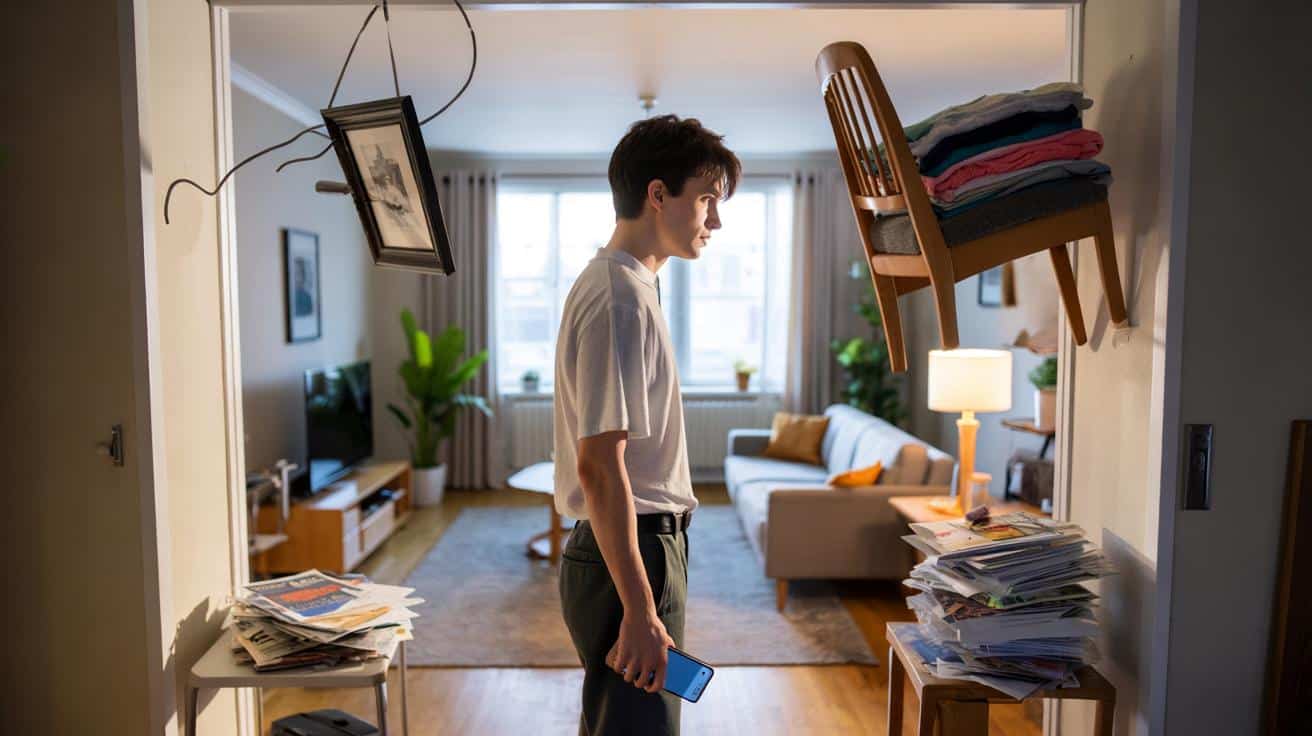
You wake up already a bit tense, grab your phone, and head to the kitchen. On the way you catch it with the corner of your eye, again. That crooked picture frame. That overflowing chair with “almost clean” clothes. That heap of unopened mail near the door.
You tell yourself you don’t have time for this, that you’re above such tiny details. But your shoulders rise a millimeter. Your jaw tightens. You sigh, for the third time and it’s not even 8 a.m.
You drink your coffee, scroll the news, answer a message. And still, the same tiny, stubborn detail sits there, silently poking your nervous system.
You already know it’s bothering you.
You just pretend it doesn’t.
Das kleine Detail, das deine Stimmung heimlich sabotiert
Walk through your home as if you were a guest. Your eyes won’t go to the nice rug you chose or the candle on the table. They’ll jump straight to that one visual “noise” you haven’t fixed for months. A burnt lightbulb you never replace. A half-broken handle. A cable snake near the TV.
This isn’t just about aesthetics. Your brain registers every “unfinished” detail like a tiny open tab. You think you’re ignoring it, yet your body keeps score. One tense muscle here, one extra thought there. By the end of the day, that little thing has bitten you a hundred times.
Picture this. Lisa, 34, works from home in a small city apartment. Her living room is mostly tidy, she likes neutral colors, a few plants, nothing crazy. But right next to her desk stands a wobbly chair she promised to fix “this weekend” nine months ago.
Every time she walks past, she automatically shifts her body so it won’t tip. Every video call, she glances at it to check it’s not in the frame. She complains about having “constant background stress” and buys a meditation app. She never once links her bad mood to that stupid, shaking chair.
Our brain is wired to spot danger, not beauty. That’s why you notice a stain on the wall way faster than a new cushion on the sofa. Visual clutter or a single broken detail suggests something is off, unfinished, potentially unsafe. Even if you rationally know your life is not in danger, your nervous system reacts a little each time.
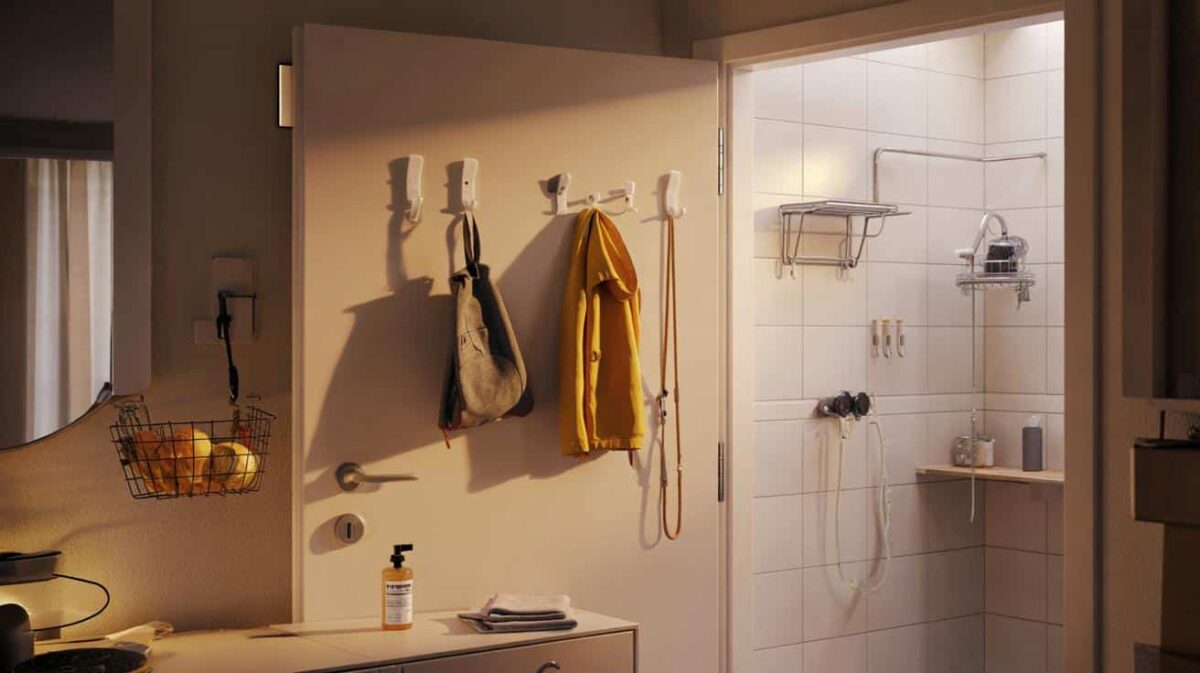
➡️ Wie funktionale Home-Hacks Command-Hooks für Mieter-freundliche Speicher-Wins nutzen
➡️ Tierärzte sprechen eine dringende Warnung an alle Hundehalter aus
➡️ Diese Methode hilft, Energiekosten zu senken, indem du Gewohnheiten statt Geräte änderst
➡️ Der schrittweise Leitfaden zu einer 30-Tage-Herausforderung gegen saisonale Affektstörung
➡️ Warum alte Möbel mit Gebrauchsspuren begehrt sind – weil sie uns an Geduld erinnern
➡️ Diese Methode hilft, Strom zu sparen, indem du Gewohnheiten an den Sonnenstand anpasst
➡️ Eigentümer: Ihre Grundsteuer ist in zehn Jahren um +32,9 % explodiert
*Over weeks and months, that “little” becomes your baseline.* You start to think you’re just tired, or just irritable, or just “that kind of person”. Yet a part of your low mood is literally hanging there, crooked, right in front of you.
Wie du das eine Detail endlich siehst – und entschärfst
Start with a weird but powerful move: a slow walkthrough of your home, phone in hand, as if you’re documenting a crime scene. Don’t tidy first. Don’t perform. Just walk. Film every room in silence.
Then, sit down and watch the video as if a friend had sent it. Notice where your eyes instantly jump. Where do you wince a little? Pause the video there. That’s usually where the mood-killing detail lives. A messy cable corner. A pile “to sort later”. A dirty mirror. A door that never fully closes.
Write down just one of them. Only one. That’s your target.
Next step, and this is where most people fall off: break the fix into something almost embarrassingly small. Replace the bulb, not the whole lamp. Fold the clothes on the chair, don’t reorganize the entire wardrobe. Throw away the stack of flyers, don’t redo your filing system.
Let’s be honest: nobody really does this every single day. We wait for the mythical free weekend that never comes, so the small detail turns into a heavy symbol of everything we’re “failing” at. The trick is to treat it like washing one cup, not cleaning the whole kitchen. Ten minutes, timer on, podcast in the background, no hero story needed.
Sometimes the heaviest thing in the room is not the sofa, it’s the object silently reminding you of what you haven’t done.
- Choose one micro-detailNot the whole room. Just the one thing your eyes hate the most.
- Give it a tiny deadlineTonight before bed. Or tomorrow after lunch. Something real, not “someday”.
- Prepare the tool in advancePut the screwdriver, trash bag, or new bulb where you’ll see it when you walk by.
- Celebrate in a low-key wayCup of tea, one episode of your show, five minutes doing nothing. Anchor the good feeling.
- Observe your mood for 24 hoursNotice if your morning feels 5% lighter. That 5% is the whole point.
Warum dieses eine Detail so viel über dich erzählt
Once you remove that daily visual thorn, something subtle happens. Your brain gets a small piece of evidence that you are capable of changing your environment, not just surviving inside it. That’s a quiet but powerful shift.
Maybe you finally throw out the broken lamp you’ve kept “for later”. Maybe you frame the poster that’s been rolled up for years. Maybe you fix the cupboard that always bangs too loud. These are not big renovations. They’re micro-acts of respect toward the person who lives there: you.
You might also notice a strange side effect. When one sabotaging detail disappears, another one suddenly appears in high definition. The squeaky door you never heard before. The pile of shoes camping in the hallway. The dish towel that always smells slightly off.
You’re not becoming more picky. You’re just finally seeing what has been stealing tiny pieces of your calm for a long time. From there, you can choose what matters. Some things you’ll let go. Others you’ll fix fast. That choice is where your mood starts to breathe.
The plain truth is this: your home is talking to you all the time. Through that loose handle, that dusty corner, that overloaded chair. Ignoring it is also a message, usually one that says, “I don’t have time for myself.” When you change just one detail, you don’t magically solve your life. You do something quieter and maybe more honest.
You tell yourself, in a very concrete way, that your daily mental weather deserves a little less noise. And that’s already a different life rhythm.
| Key point | Detail | Value for the reader |
|---|---|---|
| Visuelle Störquelle erkennen | Bewusster Rundgang, Videoaufnahme, Blick auf den ersten “Aua-Moment” | Hilft, das wahre Stimmungskiller-Detail zu finden statt “alles” zu hassen |
| Kleine statt große Aktionen | Eine Glühbirne, ein Stuhl, ein Stapel Papier, maximal 10–15 Minuten | Senkt die Hürde, wirklich ins Handeln zu kommen und nicht zu prokrastinieren |
| Konsequenz für die Stimmung | Mikro-Beweis: “Ich kann meine Umgebung verändern” | Stärkt Selbstwirksamkeit, senkt unterschwelligen Stress und hebt die Laune im Alltag |
FAQ:
- Wie merke ich, welches Detail meine Laune wirklich ruiniert?Spür auf deinen Körper: Wo seufzt du automatisch, rollst innerlich mit den Augen oder spannst kurz die Schultern an? Genau dort sitzt der Stimmungskiller.
- Was, wenn mir alles in meiner Wohnung auf die Nerven geht?Dann ist es umso wichtiger, brutal klein anzufangen. Ein Quadratmeter, eine Ecke, ein einziges Objekt. Dein Nervensystem braucht ein erstes, klares Erfolgssignal.
- Ich habe keine Zeit für Wohnungs-Optimierung, was dann?Du brauchst keinen Nachmittag, sondern ein Zeitfenster kürzer als eine Sprachnachricht: 5–10 Minuten. Kopfhörer rein, Timer stellen, nur das eine Detail angehen.
- Muss ich Geld ausgeben, um das zu ändern?Oft nicht. Viele sabotierenden Details sind Müll, Chaos oder kaputte Dinge, die eher raus als ersetzt werden wollen. Manchmal ist der befreiendste Kauf tatsächlich ein Müllsack.
- Wie halte ich den Effekt langfristig?Mach aus dem Ganzen kein “Projekt”, sondern ein kleines Ritual: Ein Detail pro Woche. Donnerstagabend, Sonntagmorgen – egal. Regelmäßig winzige Eingriffe, statt seltener Großaktionen.