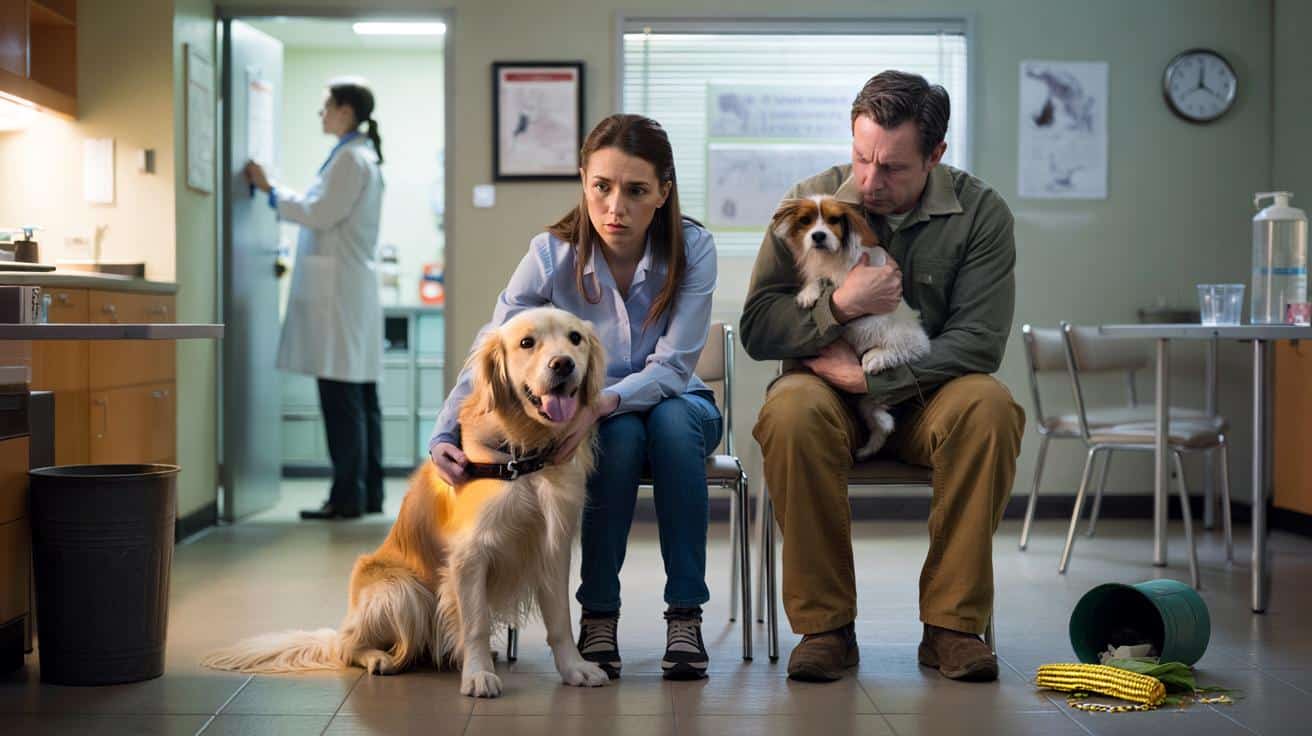
The waiting room smelled faintly of disinfectant and wet fur. A young woman sat doubled over her phone, one hand buried in the collar of a golden retriever that was panting too fast, eyes glassy in a way that instantly made everyone else uneasy. Across from her, a man in work pants hugged a tiny terrier to his chest, staring at the floor as if he’d done something unforgivable.
The vet door opened, another tech called a name, and the room tensed again. Nobody spoke, but the same question ran through all those worried faces: “Did I miss something? Could I have prevented this?”
These days, more and more veterinarians say the answer is yes. And their warning to dog owners is sharper than ever.
Tierärzte schlagen Alarm: Gefahren, die wir zu spät erkennen
Ask any vet about the last truly bad emergency they saw, and they’ll probably tell you a version of the same story. A dog that “seemed a bit off” in the morning and was in critical condition by the evening. A small sign dismissed as stress, weather, or age that turned out to be the first symptom of something life-threatening.
What used to be rare is starting to feel routine. Vets report more poisoning cases, more stomach torsions, more heatstrokes, more dogs collapsing after a “simple” walk. The pattern isn’t random. It’s a mix of lifestyle changes, climate, trends on social media and simple lack of information.
The brutal part? Many of these disasters begin with a detail that looked harmless.
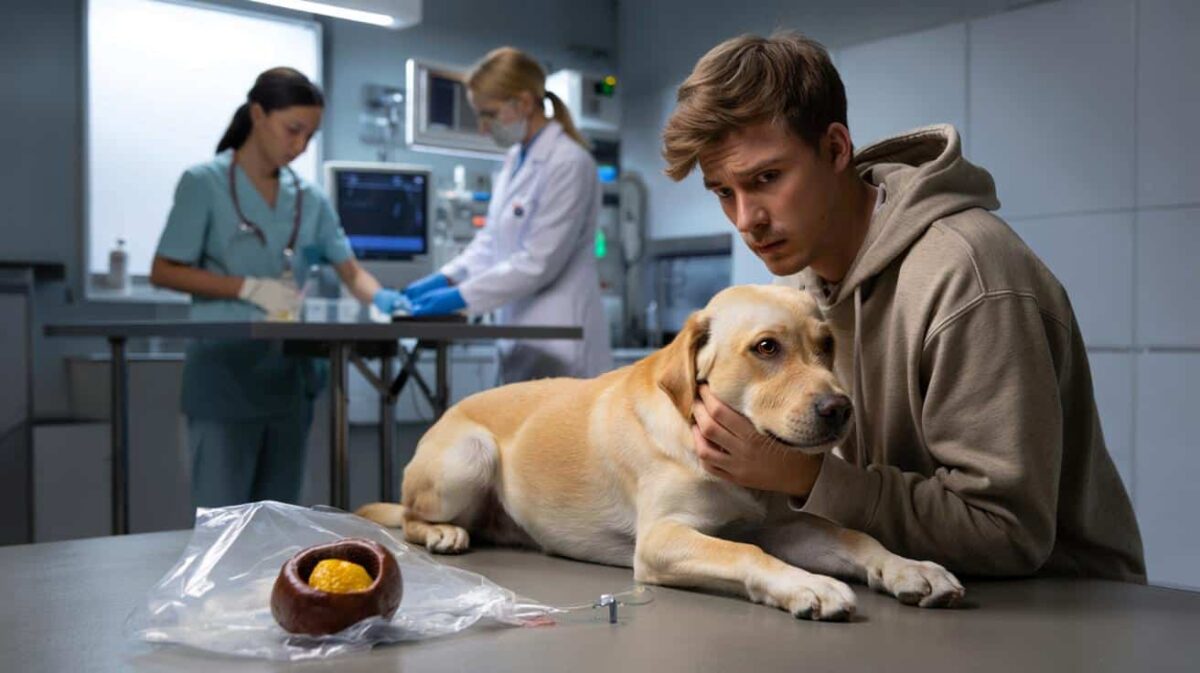
A vet in Munich tells the story of Milo, a two-year-old Labrador who loved to steal things from the trash. One Sunday he swallowed a corn cob, playing the clown while his family laughed and filmed him for Instagram. He vomited once in the afternoon, then seemed “tired from the excitement”.
By midnight he was rushed into emergency surgery with a blocked intestine. The family was stunned. They knew chocolate and grapes were dangerous. Corn cobs? Never heard of it. The surgeon later admitted: she sees this kind of case every single week. Different object, same story.
This isn’t about “irresponsible” owners. It’s about how fast a normal day can flip into a nightmare, just because we don’t see certain objects and habits as real threats.
Veterinarians across Europe and the US are now repeating a clear message: modern dogs live in a world that isn’t made for them. Our apartments, gardens, diets and routines are designed for humans. Dogs navigate that space with their nose, their mouth and their hunter instincts.
➡️ Warum du beim Kochen keine Holzlöffel verwenden solltest, wenn du krank bist
➡️ Der schrittweise Leitfaden zu einer 30-Tage-Herausforderung gegen saisonale Affektstörung
➡️ Warum alte Möbel mit Gebrauchsspuren begehrt sind – weil sie uns an Geduld erinnern
➡️ Diese Methode hilft, Energiekosten zu senken, indem du Gewohnheiten statt Geräte änderst
➡️ Warum Menschen, die viel lesen, oft über ein höheres Einfühlungsvermögen verfügen
➡️ Diese Methode hilft, Strom zu sparen, indem du Gewohnheiten an den Sonnenstand anpasst
➡️ Die alte ayurvedische Praxis, die Hormone natürlich ausgleicht und PMS-Symptome um 70% reduziert
That means a fragrant cleaning product is a toxic temptation. A decorative stone in the garden is a potential obstruction. A heatwave is more than “uncomfortable weather”; it’s a real medical risk. For the vet, these links are obvious. For the average owner, they still feel abstract until the bill and the diagnosis land on the table.
Let’s be honest: nobody reads a full toxicology chart before buying a new plant or snack. Yet that’s exactly the blind spot vets are warning about now.
Die neuen “No-Gos” im Alltag: Was Tierärzte wirklich sagen
The first, simplest method vets beg dog owners to adopt is almost boring: look closely, once a day, without your phone. One minute to scan your dog from nose to tail. Eyes clear? Gums pink and moist? Breathing calm? No swollen belly, no limping, no hidden wound under the fur?
This tiny ritual trains your brain to recognize what “normal” means for your dog. Because when a crisis hits, the key sign is often a subtle difference. Faster breathing than usual. A belly that feels harder than yesterday. A dog that refuses a treat they normally inhale.
One minute a day sounds trivial. Yet many emergency vets will tell you: that one minute could be the difference between “We caught this early” and “We did all we could”.
Then there’s the hard truth about classic mistakes. Long runs in full sun “because the dog has energy”. Bones from the table “because it’s natural”. Trendy raw diets copied from TikTok, without a single blood test or professional plan behind them.
Vets aren’t trying to kill your fun or shame you. They see the broken teeth, the perforated intestines, the pancreatitis, the heatstroke. They see the guilt on people’s faces when they realize the treat, the walk or the Instagram tip was the trigger.
We’ve all been there, that moment when you thought “It’ll be fine, it’s just this once.” The warning from vets is not about perfection. It’s about understanding which “just this once” can have a brutal price.
Inside clinics, the language is getting clearer. One Berlin emergency vet put it this way:
“Most owners don’t need more love for their dogs. They need better information. Love alone doesn’t protect a dog from a blocked stomach or a heatstroke in the car.”
So what are the red lines professionals are drawing right now? At the top of their list you’ll often hear:
- Kein Hund alleine im Auto bei Sonne – auch nicht für 5 Minuten.
- Keine gekochten Knochen, keine Spieße, keine Maiskolben als Kau-“Spaß”.
- Keine Garten-Schneckenmittel oder Rattengift in erreichbarer Nähe.
- Keine brutalen Sporteinheiten bei Hitze oder auf heißem Asphalt.
- Keine Diät-Experimente ohne Rücksprache mit einem Tierarzt.
*It sounds strict, yet every single Punkt in dieser Liste stammt aus einem echten Notfallprotokoll.*
Was Tierärzte sich heimlich von Hundehaltern wünschen
Beyond all the scary cases, many vets quietly wish for something softer from dog owners: more curiosity, less panic. Instead of googling “worst case scenario” at midnight, call your vet earlier in the story. Ask before the barbecue if corn cobs and grills are a risk. Ask before the 15 km run if your dog’s joints and heart can handle it.
One simple habit often recommended: have an emergency plan written down. Clinic number on the fridge. Nearest 24/7 practice saved in your phone. A basic dog first-aid kit with bandages, a muzzle, saline for eyes, and your dog’s medications if they have any.
It feels excessive until the day your dog cuts a pad on glass at 10 pm or eats a suspicious mushroom in the park. Then that little piece of preparation buys you precious minutes.
Vets also see another recurring trap: owners waiting “to see if it gets better by tomorrow” with symptoms that really need attention now. Repeated vomiting, a belly that suddenly bloats, a dog that tries to vomit but can’t, a collapsed animal, bloody diarrhea, seizures. These are not “wait until morning” situations.
There’s no shame in overreacting once or twice. There is deep regret in reacting too late. And yes, money is part of this conversation. Emergency care is expensive, and more vets are now advising owners to think about pet insurance or a dedicated savings envelope before a crisis, not after.
This isn’t about fear. It’s about not standing in that waiting room one day, wishing you’d taken that “small sign” more seriously.
The emotional weight of these warnings is something vets carry home at night. They hold the hands of families saying goodbye to dogs who could have survived. They deliver diagnoses that begin with the words “If we had seen him yesterday…” and feel the air leave the room.
One experienced practitioner summed it up to me like this:
- “I don’t expect perfect owners.I just hope they call us before Google and TikTok.”
- “I don’t want them to live in fear.I want them to know a few red flags they never ignore.”
- “I don’t need them to do everything right.I need them to do three or four key things consistently for their dog’s whole life.”
- “Prepared owners are calmer in the worst moments.The dog feels that, and it changes everything in the exam room.”
- “The best compliment is when I never see a dog in my emergency shift.Just for vaccines, checks and old-age care. That’s my dream.”
Zwischen Angst und Verantwortung: Was du aus diesen Warnungen machst
If you share your life with a dog, these vet warnings can feel heavy, almost suffocating. Suddenly the harmless corn cob, the cute balcony plant, the quick supermarket dash with the dog in the car all look like trapdoors. That’s not the point. The point is to shift from a vague sense of “I love my dog” to a more grounded “I protect my dog from specific, real-world risks”.
You don’t need a veterinary degree for that. You need three things: basic knowledge about toxins and heat, a daily habit of actually looking at your dog, and the courage to ask “Is this safe?” before you follow a trend or a well-meaning tip from a stranger. Just these three pillars lower the chance of ever seeing the inside of an emergency ward at 3 am.
The rest is a journey you navigate with your vet, not against them. If anything in this text made you think of your own dog’s routine, that’s already the beginning of a different kind of care. And that’s exactly what those worried faces in the waiting room silently wish they’d started sooner.
| Key point | Detail | Value for the reader |
|---|---|---|
| Frühe Warnzeichen erkennen | Täglicher 1-Minuten-Check von Augen, Atmung, Bauch, Verhalten | Erhöht die Chance, Krankheiten zu bemerken, bevor sie lebensbedrohlich werden |
| Konkrete Risiken vermeiden | Keine Hunde im heißen Auto, keine gekochten Knochen, Giftstoffe aus der Umgebung entfernen | Reduziert das Risiko für Not-OPs, Vergiftungen und vermeidbare Unfälle |
| Notfallplan vorbereiten | Tierarztkontakte speichern, Erste-Hilfe-Set anlegen, über Pet-Insurance nachdenken | Sorgt für schnellere, ruhigere Reaktionen im Ernstfall und weniger Überforderung |
FAQ:
- Question 1Welche Symptome bei meinem Hund gelten als echter Notfall?
- Question 2Welche Lebensmittel im Haushalt sind für Hunde besonders gefährlich?
- Question 3Wie schütze ich meinen Hund im Sommer vor Hitzschlag?
- Question 4Lohnt sich eine Hundekrankenversicherung wirklich oder reicht ein Sparbuch?
- Question 5Was sollte in einer gut ausgestatteten Erste-Hilfe-Box für Hunde auf keinen Fall fehlen?